Reduce resonance. Maintain stability across engine speeds.
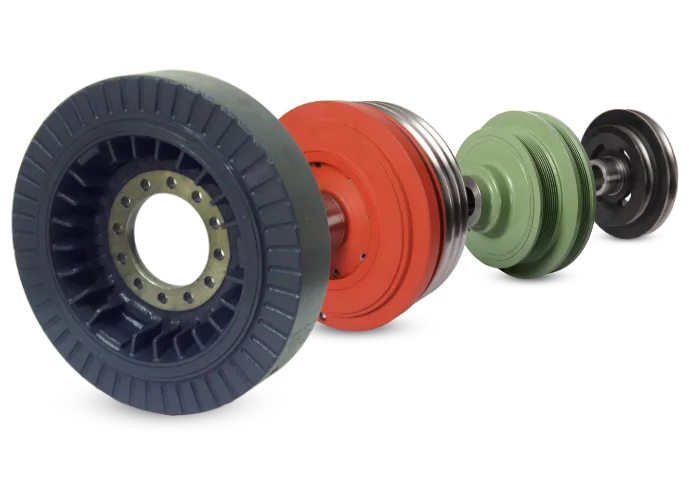
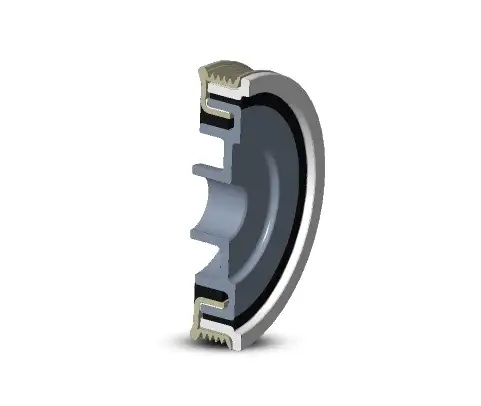
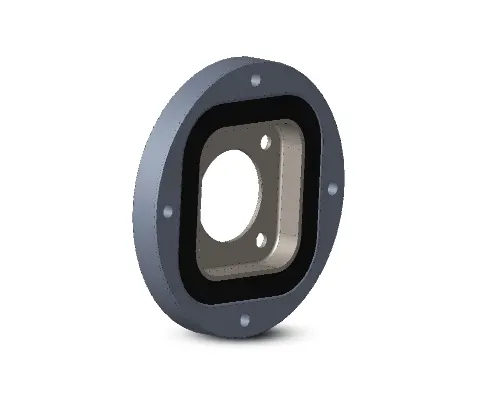
Rubber torsional vibration dampers use elastomer elements and an inertia ring to absorb crankshaft vibration. Energy dissipates through the elastomer as vibration increases, which reduces resonance and fatigue. Engine performance remains stable across operating speeds and conditions.
Regular Rubber Damper
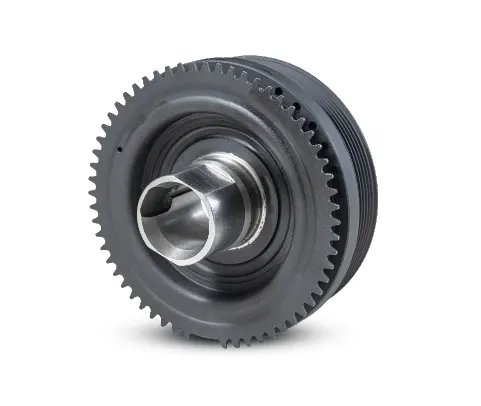
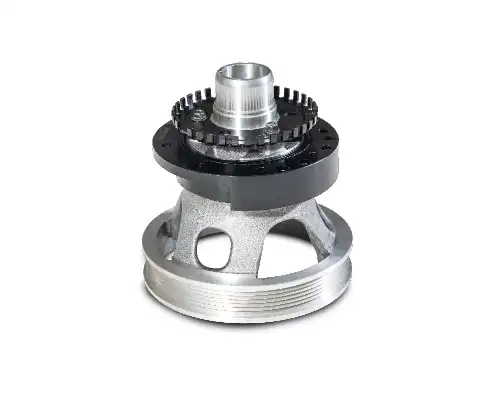
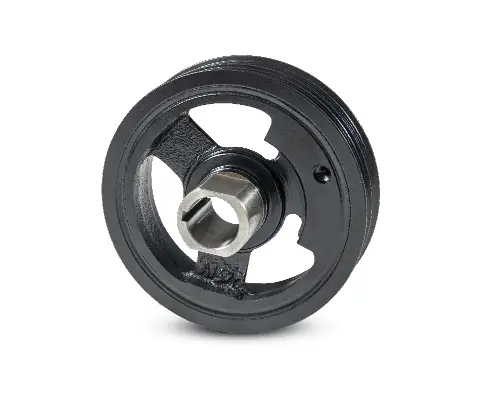
Regular Rubber Dampers use a V-grooved inertia ring with elastomer compressed between the hub and ring as per engineered standards. The configuration manages torsional vibration and supports Front-End Accessory Drive (FEAD) power transmission. Tone wheel variants and bolted pulley designs expand compatibility across engine requirements. The design operates reliably across varying speeds while maintaining stability and service life.
Applications
Passenger vehicles
Smooth engine vibration control
Commercial vehicles
Reliable FEAD power transmission
Industrial engines
Stable performance in operations
Generator sets
Consistent vibration-damping output
Agricultural equipment
Durable field performance support
Technical specifications
Size
Application-specific configurations
Pressure class
Suitable for standard loads
Temperature
Operates across varied ranges
Connection type
Hub-mounted/pulley integrated
Operation
Elastomer-based torsional damping
Integral Rubber Damper
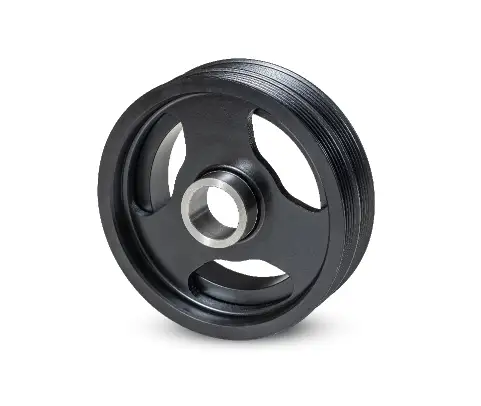
Integral Rubber Dampers feature V-grooves machined directly onto the hub, while the inertia ring rotates freely. Elastomer compression follows the same principle as regular dampers, ensuring consistent damping efficiency. Fewer components reduce assembly complexity and improve space utilization. The design suits engine configurations with limited packaging space while maintaining reliable vibration control.
Applications
Compact engines
Space-efficient vibration damping
Passenger cars
Optimized packaging solutions
Automotive systems
Integrated design applications
Industrial units
Reliable compact performance
Small machinery
Efficient vibration control
Technical specifications
Size
Compact design configurations
Pressure class
Suitable for moderate loads
Temperature
Designed for standard ranges
Connection type
Integrated hub design
Operation
Elastomer-based damping system
Sheet Metal Rubber Damper
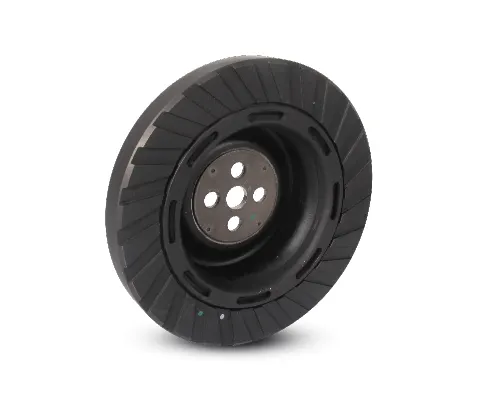
Sheet Metal Rubber Dampers use a hub formed through precision sheet metal stamping and are available in regular and integral configurations. Overall mass reduces by up to 15–20% compared to conventional cast components while structural strength remains intact. The design supports repeatability and cost efficiency in high-volume manufacturing. Damping performance remains consistent across applications.
Applications
Passenger vehicles
Lightweight performance enhancement
Automotive production
High-volume manufacturing efficiency
Industrial equipment
Reduced weight applications
Compact engines
Efficient vibration control
Commercial vehicles
Optimized system performance
Technical Specifications
Size
Lightweight design configurations
Pressure class
Suitable for moderate loads
Temperature
Standard operating ranges
Connection type
Stamped hub assembly
Operation
Elastomer-based damping
Unbalance Mass Rubber Damper
Unbalance Mass Rubber Dampers address secondary imbalances, particularly in 3-cylinder engines. Counterweights integrated onto the hub reduce unwanted vibrations and improve engine smoothness. The core damper structure remains aligned with standard rubber dampers, ensuring torsional vibration control. Vibration transfer reduces, and overall engine refinement improves.
Applications
3-Cylinder engines
Reduce secondary imbalance vibrations
Passenger cars
Improve ride comfort
Compact vehicles
Enhance NVH performance
Automotive systems
Smooth engine operation
Light vehicles
Optimized vibration control
Technical specifications
Size
Application-specific configurations
Pressure class
Suitable for dynamic loads
Temperature
Designed for varied conditions
Connection type
Hub with integrated mass
Operation
Elastomer damping with counterweight
Rubber Molded Damper
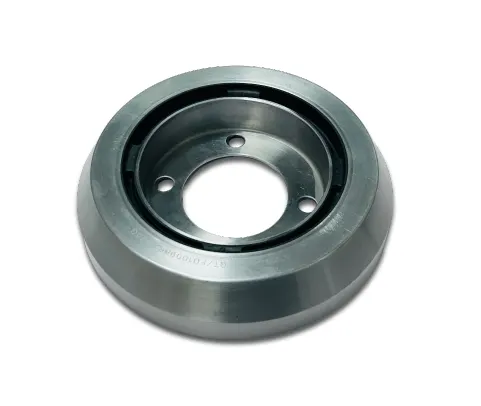
Rubber-Molded Dampers are manufactured through direct injection molding, where uncured rubber is injected between the hub and inertia ring under controlled conditions. A chemical bond forms between rubber and metal, eliminating the risk of delamination. Material characteristics can be tuned during manufacturing, allowing precise control of stiffness and damping behavior for specific applications.
Applications
Specialized engines
Precision damping requirements
Industrial systems
High-strength bonded components
Automotive applications
Reliable vibration control
Custom solutions
Tailored damping performance
Low volume production
Controlled manufacturing output
Technical specifications
Size
Custom configurations available
Pressure class
Suitable for precision applications
Temperature
Wide operating ranges
Connection type
Molded rubber-metal bond
Operation
Injection-molded elastomer damping
Dual Mass Rubber Damper
Dual Mass Rubber Dampers combine a harmonic balancer and an isolator within one design. Torsional vibrations and speed irregularities are managed simultaneously. High-order torsional modes and low-order rigid body movements are both addressed. Fluctuations transmitted to the FEAD system reduce, supporting smoother engine operation and improved system stability.
Applications
Passenger cars
Improves driving comfort
Automotive engines
Reduces speed fluctuations
FEAD systems
Protects accessory drives
Industrial engines
Enhances system stability
Modern powertrains
Advanced vibration control
Technical specifications
Size
Application-based configurations
Pressure class
Suitable for dynamic loads
Temperature
Designed for wide ranges
Connection type
Integrated dual-mass assembly
Operation
Combined isolation and damping
Propeller Shaft Rubber Damper
Propeller Shaft Rubber Dampers reduce rotational vibrations transmitted through the drivetrain to the driveshaft. The design targets critical speed ranges, typically around 50–60 Hz. The assembly comprises a hub, an elastomer element, and an inertia ring configured for low-frequency damping. Vibration transfer reduces, and drivetrain operation remains stable.
Applications
Drivetrain systems
Reduce rotational vibrations
Passenger vehicles
Improve cabin comfort
Commercial vehicles
Enhance drivetrain stability
Automotive systems
Control critical speeds
Transmission units
Minimize vibration transfer
Technical Specifications
Size
Application-specific configurations
Pressure class
Suitable for rotational loads
Temperature
Standard operating conditions
Connection type
Shaft-mounted assembly
Operation
Tuned elastomer vibration damping
Provide your requirement and we’ll keep it on track.







 enquiry@hodekindia.com
 +(91)20-26160065